The men behind PRE Security
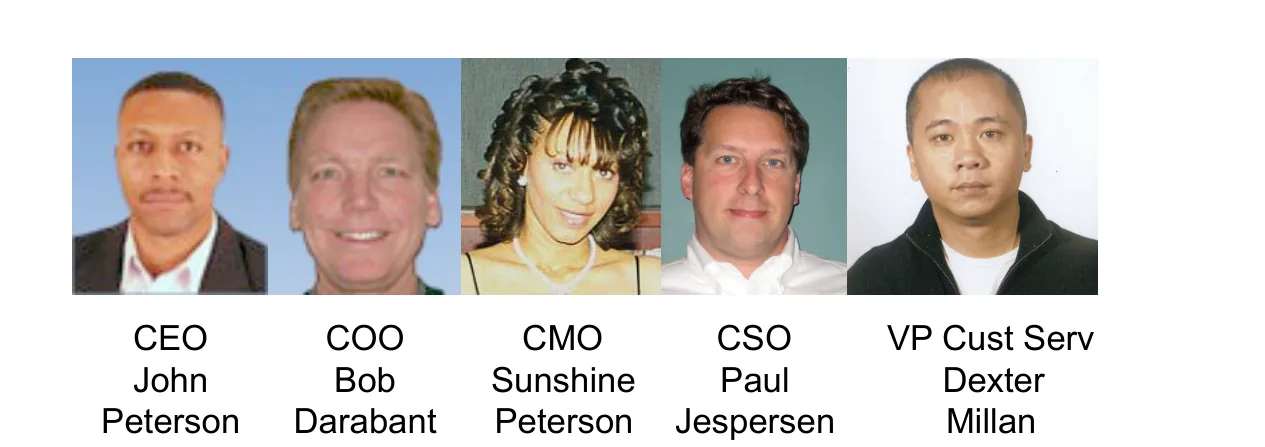
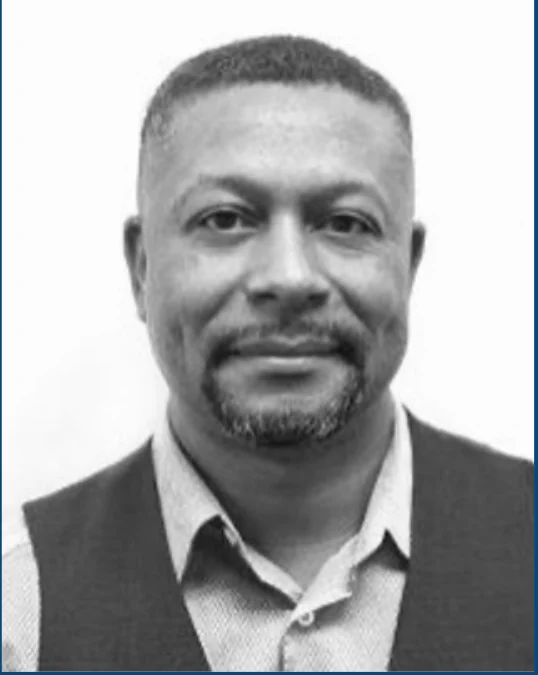 John PetersonFounder & CEOBooked in Fulton County on a felony fugitive-from-justice charge, 2009
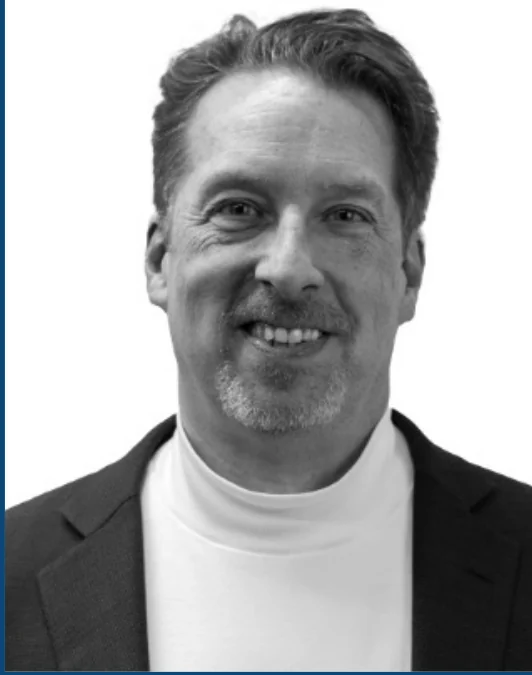 Paul JespersenFounder & co-CEO, financeIndicted by a grand jury for aggravated assault with a deadly weapon, 2018
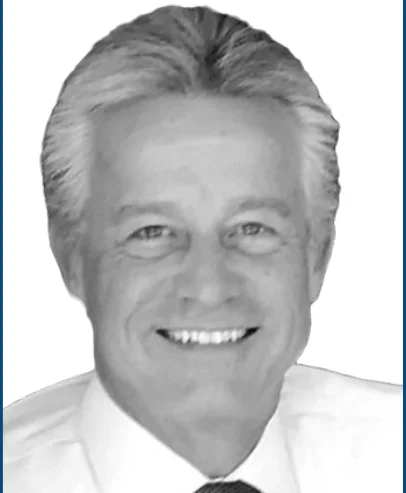 Stewart ReichardtSold PRE's SAFEsBankruptcy trustee recovered a "fraudulent conveyance" to his mother, 2011
Photos and titles from PRE Security's own investor prospectus, October 2024.
PRE Security · Dossier
What investors were told and what the record shows
PRE Security, Inc. is not the company its investors were sold. Its founders, John Peterson and Paul Jespersen, raised what they say is more than $10 million, most of it from their own friends and family, on claims that were false. They told investors PRE had patents when it had none. They promised customers and revenue that were never shown. They sold John Peterson as a serial founder of "5 IPO's and 9 acquisitions", a record the companies' own filings do not support. They hid a federal trade-secrets lawsuit against him, a corporate charter that went void while they kept selling, a patent application rejected in full, $232,698 in federal tax liens against Paul Jespersen, and a court judgment against the company and both of them for failing to pay an employee's wages. And they had done it before. In 2009 the same two men, with Bob Darabant, who later ran PRE's sales, ran ProxyComm, a pyramid scheme sold as a phone company, which froze its members' pay while calling itself "financially healthy and profitable", then relaunched under John Peterson's brother's name as John Peterson filed for bankruptcy.
None of this was disclosed to the people who gave them money. When a court ruled against them, they told investors it was a dispute. When former employees spoke up, John Peterson called them suspects and promised "jail time". When the record turned against them in 2009, they deleted it and relaunched under a relative's name. This dossier sets out what they did, in order, in plain terms. Every claim links to a dated entry in the timeline, and every entry opens the documents behind it: court files, sworn bankruptcy schedules, patent office records, state filings, and the founders' own decks, investor updates and posts.
If you invested, none of this is a judgment on you. You trusted people you knew, and they spent years building a story designed to hold up: paid awards, paid press releases, confident updates and a steady stream of photos from around the world. The rest of this page shows how that story was built and what sits behind it.
Who these people are
John Uliss Peterson is PRE Security's founder and chief executive. Investors were told he is a Silicon Valley veteran with five IPOs, nine acquisitions, thirteen patents, and the inventor behind PRE's patented AI. The record shows a career of mid-level product and sales roles inflated on his own biographies, a sworn 2009 bankruptcy with $100 in the bank, a felony fugitive booking fifteen days later, domestic-violence restraining orders, and a 2023 federal trade-secrets suit by his former employer Ericom that he settled in the middle of PRE's first raise. He ran ProxyComm as its chief executive. He is the face of its investor pitch, and its public voice.
Paul Soren Jespersen is PRE's co-founder and its co-CEO for "Finance / Operations". He signs the investor updates and is named on PRE's only patent. He has worked beside John Peterson since at least 2008, when both were at Montego Networks, and at ProxyComm he wrote the income pitch and the notice that froze "ALL commissions". The public record shows $232,698.27 in federal tax liens against him, a Utah judgment over an unpaid bill, Texas theft-by-check charges, a grand-jury indictment for aggravated assault with a deadly weapon, and a Discover Bank lawsuit filed while he ran PRE's finances. In May 2026, while still co-CEO, he incorporated his own cybersecurity company.
Stewart Reichardt sold PRE's SAFEs. Investors were told he was a commercial banker with "over 25 years" of experience at "Wells Fargo, Citibank, Washington Mutual". The national mortgage registry shows a residential mortgage lender, his own court filings show MetLife fired him within months in 2008, and his 2011 bankruptcy ended with the trustee recovering money he had moved to his mother. He holds no securities licence of any kind. He appears beside John Peterson in many of the travel posts described below.
Bob Darabant ran ProxyComm's finances and later became its chief operating officer. In August 2025 he rejoined his ProxyComm partners as PRE's head of Americas sales, and by October 2026 he had left. In between he was named as a defendant in a federal fraudulent-inducement suit that investors were never told about.
The family runs through the story too. John Peterson's brother Austin Peterson took the CEO title when ProxyComm relaunched in 2009, and is the CEO of AskEley, the company PRE later licensed its only patent to. John Peterson's son sits on AskEley's board. Sunshine Peterson is listed in ProxyComm's decks as a co-founder, owner and chief marketing officer. Leo Versola, now PRE's product and technology chief, was a manager of Red Line Venture Group, the "venture capital firm" John Peterson set up himself in 2003. And every PRE SAFE gives as the company's address a house in Salt Lake City that belongs to Paul Jespersen's brother's family.
What the words in this story mean
PRE raised its money by selling SAFEs, "simple agreements for future equity". A SAFE is not a share. The buyer hands over cash today for the promise of shares later, if the company ever holds a priced funding round. Until then the buyer owns nothing in the company, has no vote and is owed no financial statements. If the company fails first, a SAFE is usually worth nothing. That makes a SAFE buyer wholly dependent on what the founders choose to tell them, which is why everything PRE told its buyers matters.
A private company that sells securities without registering them with the SEC must fit within a narrow exemption. Companies using the SEC's private-offering rules file a short public notice called a Form D within fifteen days of their first sale. PRE never filed one, and California shows no notice either. The most common of those rules also forbids public advertising of the offering unless every buyer's status as an accredited investor is checked. PRE's home page invited every visitor to "invest in PRE Security", and its CEO publicly posted that it had raised "$10+ MILLION", with an investor contact address. Selling securities to other people is licensed work, and the man who sold PRE's SAFEs has no record with FINRA, the industry's licensing authority.
A provisional patent application is a placeholder. The patent office does not examine it, it lapses after twelve months, and it gives its owner no rights at all. A company has a patent only when the patent office issues one. Until then the honest phrase is "patent pending". The patent office can also reject an application, as it did PRE's in full in June 2025.
QSBS, qualified small business stock, is a federal tax break for people who hold shares in qualifying small companies for at least five years. No government body certifies a company as QSBS, and a SAFE is not stock at all. A company that calls itself "a QSBS certified investment" is describing a certificate that does not exist.
Delaware voids a corporation's charter when it fails to file its annual report or pay its franchise tax. While the charter is void, the company has lost its right to do business. A default judgment is what a court enters when a defendant has been properly served and does not appear. The claims are treated as established, and in PRE's case the court also held an evidentiary hearing before entering a final judgment. A trade-secrets suit accuses someone of taking confidential technology that belongs to another company. Settling one keeps the evidence out of a public trial.
It started with ProxyComm
Fourteen years before PRE, John Peterson, Paul Jespersen and Bob Darabant ran ProxyComm together, a Georgia pyramid scheme sold as a phone company, which none of them lists in any biography. John Peterson was its CEO and co-founder. Paul ran strategy and marketing and later held the title Chief Strategy Officer, and Bob ran financial operations and later became COO. The partnership was already a year old. In 2008 Montego Networks listed Paul beside John Peterson as a vice president, a job Paul's LinkedIn also leaves out.
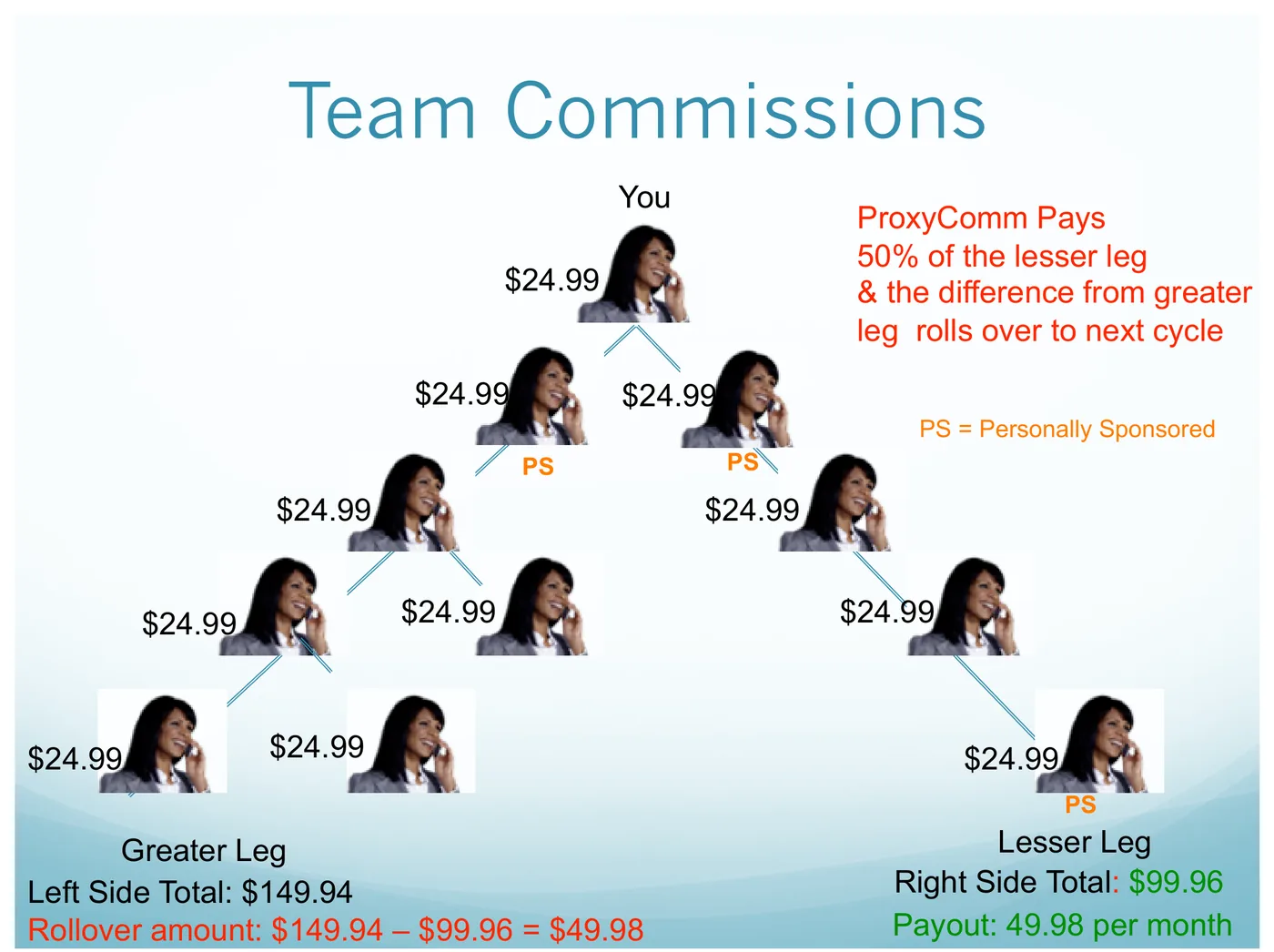
ProxyComm was a pyramid scheme. That is not a figure of speech. The Federal Trade Commission's test for a pyramid scheme is that members pay to join and make their money mainly by recruiting new members rather than by selling to real customers, and ProxyComm's own documents meet every part of it. Recruits paid to join and paid a compulsory $24.99 a month for a phone line, and they earned money by recruiting others beneath them. The plan placed each member in "a triangle with you in the center top position", with commissions "to infinite depth", and paid out on the weaker of two "legs" of recruits below. The phone line was the entry fee, the recruits were the customers, and the money flowed up from the people recruited to the people at the top. The founders' own slide drew it as a pyramid, with "You" at the peak. The company called itself "profitable from day one" and offered a Bentley as a top prize.
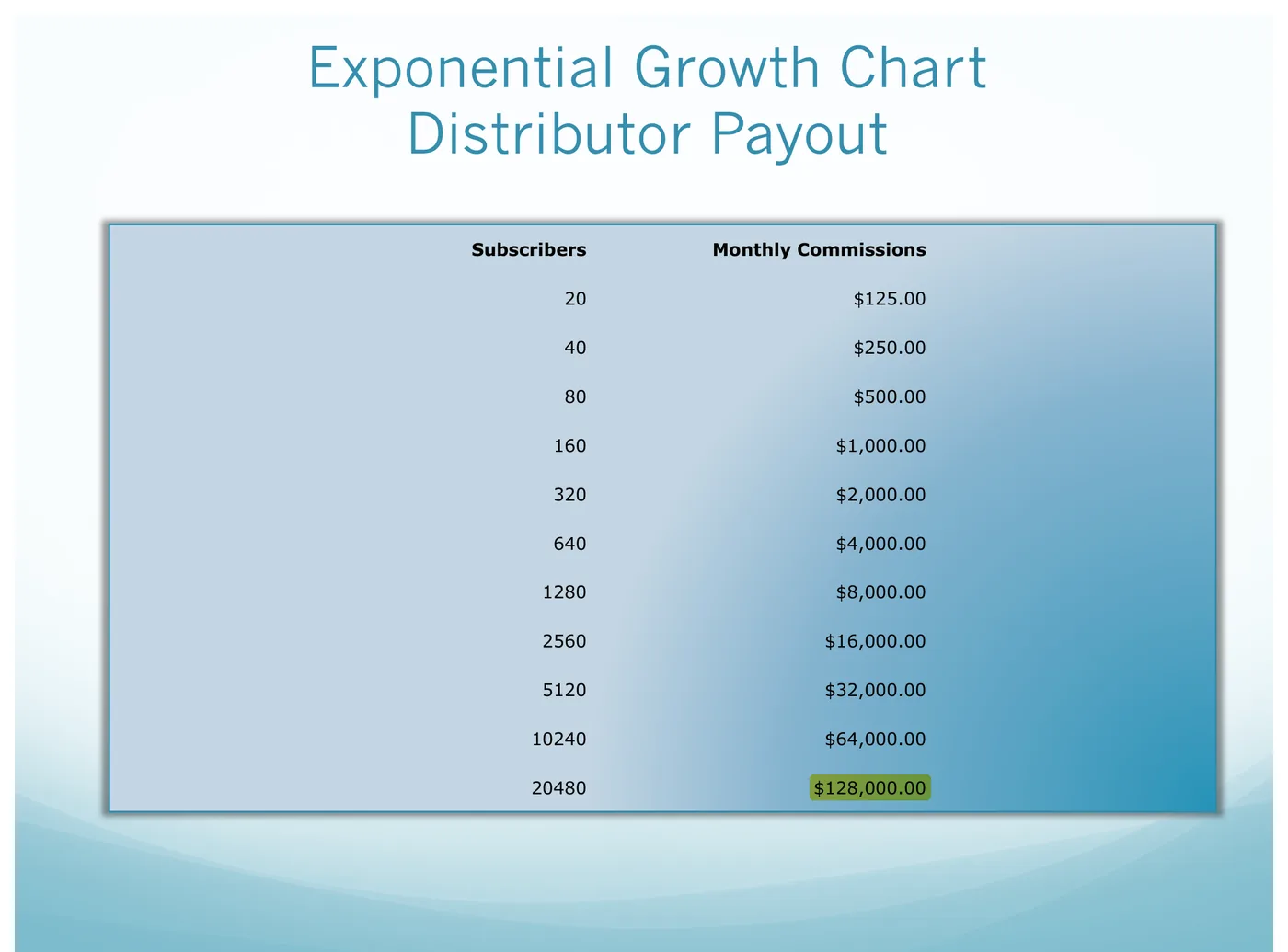
The pitch, written by John Peterson and Paul, sold income first. John Peterson's deck promised "$128,000.00" a month, and Paul's promised "over Half a Million Dollars" a year. The home page counter claimed 6,789 "Customers & Distributors", more than the company's own "6,500th distributor" announcement weeks later. ProxyComm sold itself as "the first and only communications company offering exclusively unlimited calling", then backdated a fair-use policy and announced it was "forced to retire the UNLIMITED label". Its payroll page collected members' bank account and routing numbers unencrypted, from people who had trusted it with their money. These are the men who now ask investors to trust them with a cybersecurity company.
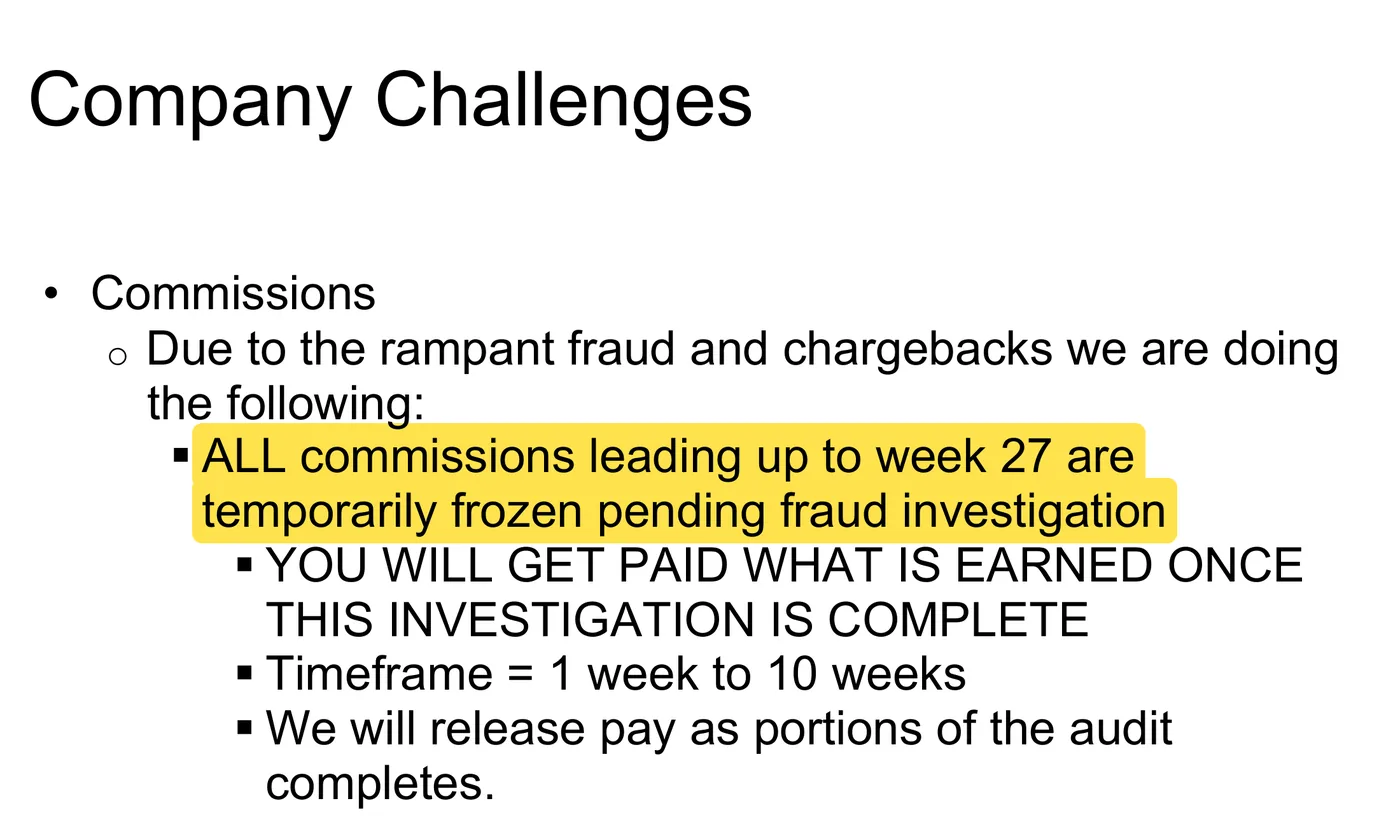
When the money ran short, the founders did exactly what PRE would do later. On 5 June 2009 John Peterson cancelled that day's commission payments while insisting the company had "record revenues". Within weeks ProxyComm admitted it had "missed payroll", stopped live support and moved its own top position into another person's name. He threatened to terminate members "with forfiture of compensation" for "disperaging remarks about the company". The refund promise and the federal right to cancel were written out of the terms, along with the company's liability for "any commissions owed to the distributor". On 17 July a notice from Paul froze "ALL commissions ... pending fraud investigation" while calling the company "financially healthy and profitable".
Twenty-five blog posts about payroll, payout caps and refunds were then deleted. The frozen commissions were never shown to have been paid. In October ProxyComm relaunched as "ProxyComm ACS", with John Peterson as "Founder" and the CEO title on his brother Austin. The members who had recruited their friends were left with nothing, and the men at the top of the triangle moved on.
On 2 November 2009 John Peterson filed for bankruptcy in Georgia with $100 in the bank, $68,053.15 in child-support arrears, $36,370.01 in back taxes and a pawned Harley. He swore ProxyComm had averaged about $192,423 a month in gross receipts, valued his half of it at $0, and listed it as his only business in six years. He left out a separate Nevada corporation, ProxyComm Inc., formed that July. Fifteen days after filing, he was booked in Fulton County on a felony fugitive-from-justice charge, and an extradition proceeding opened the next day. He missed his creditors' meeting, a lender called his plan "filed in bad faith", and the case was dismissed with no discharge in January 2010. The Alpharetta house he had filed bankruptcy to save was lost to foreclosure in 2012.
ProxyComm was where these men learned how to take money from people who trusted them. The habit is older still. In 2003 John Peterson's Black Hawk Entertainment told the public its funding and a "2 million dollar line of credit" came from "Red Line Venture Group, a Silicon Valley based venture capital firm". Red Line was an LLC he had formed himself, at his own San Jose home, on the same day as Black Hawk, with Leo Versola among its managers. The outside backer was him. Neither company filed again, and California later suspended both. Twenty years later PRE would tell investors about outside licensees, partners and military customers, and the pattern would be the same.
The record investors never saw
In the years between ProxyComm and PRE, each of these men added to a public record that no investor was shown. In Santa Clara County, John Peterson's then-wife obtained domestic-violence restraining orders against him in 2011. They were renewed in 2012 and again in 2015 over his written opposition, and the court heard four contempt proceedings against him. Georgia sued him for child support seventeen days after his bankruptcy was dismissed. Five months after the dismissal he certified financial hardship "under penalty of perjury" to get a federal mortgage modification. In her own 2021 bankruptcy, his then-wife swore he owed her $30,000 in back child support.
Paul Jespersen, later PRE's co-CEO for finance and operations, carries $232,698.27 in federal tax liens. The first, $221,630.17 for unpaid 1999 and 2002 income tax, was recorded in Travis County, Texas, in 2011, and a second followed in 2019 for 2010 and 2012. Neither shows a release. In 2008 a Utah court entered a $17,117.58 judgment against him individually over an unpaid engineering bill for a land company that appears nowhere in his career history.
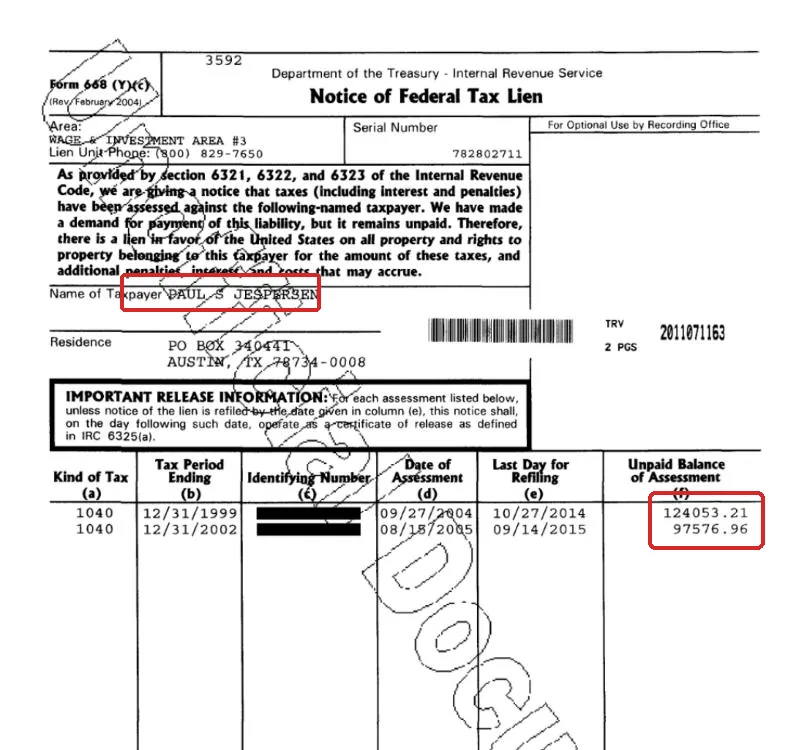
In Texas he was charged with theft by check over two 2012 checks. He ignored the summons, forfeited his bond, and left the warrants unserved for three years until his 2017 arrest. Those cases ended in dismissal on condition of counseling, not acquittal. In 2018 a grand jury indicted him for aggravated assault with a deadly weapon, after an arrest affidavit said he drove a Jeep at a woman in a grocery-store parking lot. Both felony counts were dismissed in 2020 on motions citing "Restitution Paid", not lack of evidence. In October 2024, while he was PRE's co-CEO and signing its investor documents, Discover Bank sued him for $15,630.12 on an unpaid card. That suit was dismissed without prejudice in 2026 with no payment shown. The man in charge of PRE's finances could not keep his own in order, and investors handing money to the company he ran were told none of it.
Stewart Reichardt, who sold PRE's SAFEs, was presented to investors under "Wells Fargo, Citibank, Washington Mutual" and claims "over 25 years" in commercial banking. He was a residential mortgage lender, as the national mortgage registry shows, and his own court filings show that MetLife hired, demoted and fired him within months. In 2011 he filed Chapter 7 listing a Sea Ray yacht, a Porsche Turbo, two Rolex Daytonas and sworn 2009 income of $22,297. The trustee reported what he called "a fraudulent conveyance of funds to debtor's mother" and recovered $48,941.24 from him by settlement. He has no securities licence, and even his mortgage licence lapsed in January 2024. In 2026 he was still selling his move "From Banking to the Future of Cybersecurity".
Bob Darabant rejoined his ProxyComm partners in August 2025 as PRE's head of Americas sales. Weeks later he wrote that his previous company's CEOs had denied staff commissions in a way that was "both malicious and fraudulent", the same thing his partners had done at ProxyComm. In 2026 he was named in a federal fraudulent-inducement suit that investors were never told about, and by October he had left PRE. Not one of these records was disclosed to a single investor.
The résumé investors were sold
Investors were sold John Peterson as a serial founder with "5 IPO's and 9 acquisitions". That claim is false. The IPO prospectuses of NetScreen, Fortinet, Barracuda and Zscaler never name him, and by his own LinkedIn dates he left Fortinet years before its IPO and Zscaler two and a half years before its own. His earlier biographies said four IPOs and three acquisitions, so the number grew as the raise went on. The record supports at most two IPOs and three sales, all at companies where he was an employee.
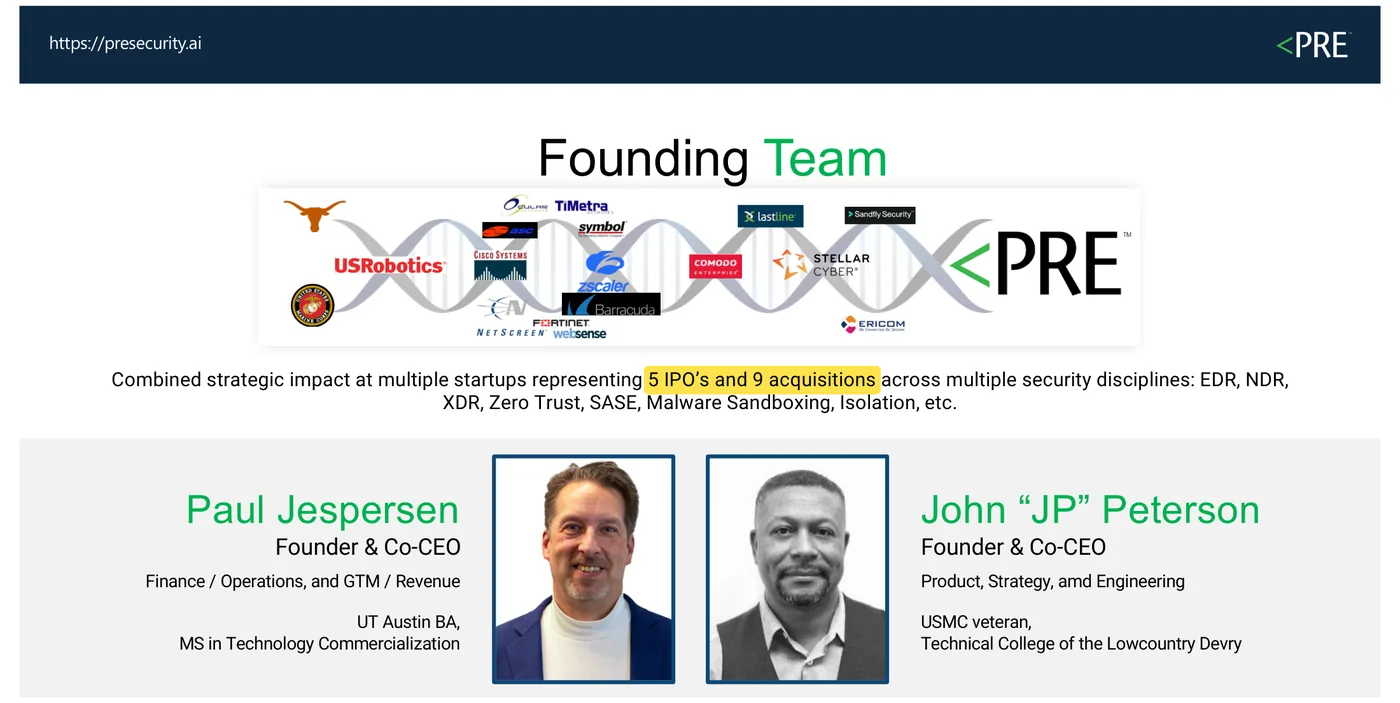
The roles were inflated the same way. Fortinet's own pages list him under three titles, none of them the "executive team" role he claims. Barracuda named him one of three "additional leaders" in a business unit, and Comodo listed him seventh of eighteen vice presidents. At Reflex Security, a job he has left off every biography, his bio was rewritten in his last weeks to say he "pioneered" a product line that was on sale ten months before he joined. Stellar Cyber's own launch release credited Paul Jespersen, not John Peterson, with its first sales, which John Peterson's LinkedIn says he "single handedly" generated. No record exists of the $7M Series A he claims for Montego, which InfoWorld called "self-funded".
The inventor story was built the same way. His only early patent filing was a Reflex application that was never granted. He wrote his own Wikipedia article crediting himself with the virtual security switch, and his "Forbes" credit is a contributor blog post citing an abandoned application. For three years Ericom billed him as a Stellar founder who "holds multiple patents", when he owned none. His own Wikipedia draft said Stellar Cyber was founded by Aimei Wei and that he was recruited in 2017. He later told his Facebook audience that investors had put "almost $40 million dollars into my product and vision", and PRE's homepage read "From the inventors of Open XDR", a technology his own signed court filing credits to Stellar Cyber.
His LinkedIn lists three full-time jobs at once and leaves out High Wire altogether. Paul's LinkedIn omits ProxyComm, a forfeited company and a gap that matches his bad-check cases. The résumé was the foundation of the pitch. It was built to make friends and family believe they were backing proven founders, and it was built to hide everything above.
Ericom, where PRE's technology story begins
In December 2019 John Peterson joined Ericom and signed an inventions agreement listing no prior inventions. Before long he was being introduced as "the inventor of ZTEdge", a product that belongs to Ericom. In December 2021, Ericom's complaint says, he brought High Wire Networks in as a reseller on a $1M commitment of which High Wire paid $50,000. Ericom's federal complaint says its browser-security project was an Ericom executive's idea, built by two outside firms, and that in 2022 John Peterson urged it be spun out so "us all" could "make some life changing money".
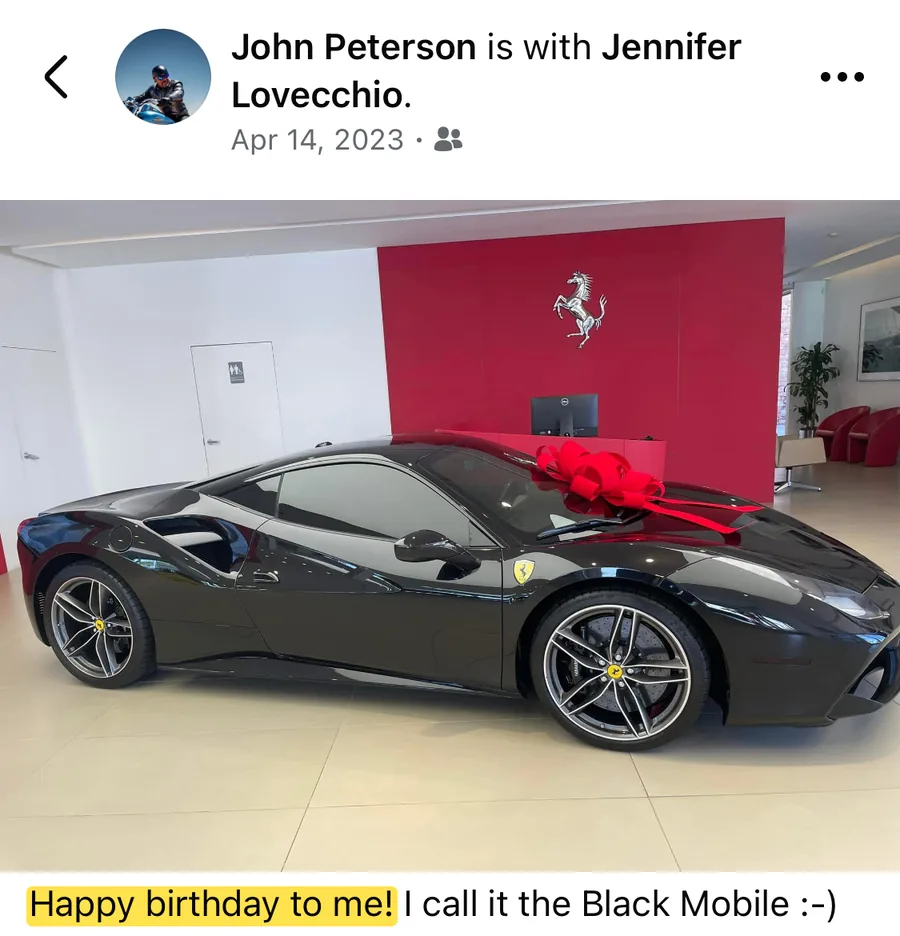
Cradlepoint bought Ericom on 4 April 2023, and John Peterson stayed on salary with no defined role. Ericom says that four days later John Peterson's account deleted the entire browser code from its GitHub. Six days after that he posted a black Ferrari 488: "Happy birthday to me!"
On 8 May 2023 he listed three browser-security inventions as his own on Cradlepoint's form. On 30 June, his last paid day, he sold browser software to High Wire Networks, warranting that he "exclusively owns" it. The same day he told Cradlepoint's leaders he was "getting paid to do nothing". The next day his resignation letter said "Cradlepoint now owns" the technology. He had sold the same thing twice in two days, once as his and once as theirs. PRE's published founding date is the day after that letter.
High Wire, a $0.09 stock with $1.3 million in cash, told the SEC it had bought his browser "IP", launched a browser extension he had "been working on for a long time", and set up Overwatch Cyberlab with him as 20% owner. Ericom's complaint says all nine of Overwatch's announced features match its own project. High Wire billed him as a "Patent Inventor" on "13 patents" when about four filings named him and none had been granted, and those biography lines reappear in PRE's investor prospectus. The browser module produced no revenue. High Wire's own filing said the only activity in his Overwatch company was his own payroll, and none of the deal's milestones were met.
On 5 September 2023 Ericom sent cease-and-desist letters, and on 18 September it sued John Peterson and High Wire in federal court for trade-secret misappropriation, breach of contract and breach of fiduciary duty. Thirty-nine days later, on 27 October 2023, PRE Security, Inc. was incorporated in Delaware. Three weeks after that, Ericom asked the court for a restraining order against him alone, seeking his personal GitHub and the "servers in [his] garage". Two days later he posted from the stands of the Las Vegas Formula 1 Grand Prix. High Wire, which still listed him as its chief product officer after PRE was incorporated, later rewrote its launch release to drop him as "inventor of the technology".
John Peterson never contested the facts. He answered the suit without a lawyer, denying three legal conclusions and leaving every factual allegation unanswered. On 12 March 2024, while PRE was raising its first money, he signed a confidential settlement, and an agreed court order binds him to it until 30 June 2027. Settling decided nothing in court, which is what it bought him: no trial, and no public verdict for an investor to find. No investor document ever mentioned the suit, the settlement or the order. The September 2024 update promised "the next Billion $ cybersecurity unicorn" eight days after the court dismissed Ericom's claims against High Wire, and the founders' slides kept Ericom on three executive bios as a credential. Meanwhile a deed moving the Morgan Hill house he lives in into its owners' family trust, signed the day after Ericom's final notice, sat unrecorded through the lawsuit.
Even the patents that do name him are not PRE's. A patent naming John Peterson as sole inventor was granted in 2025 to Ericom, and Ericom has kept filing on his Ericom-era work. The company that sued him owns them.
How the money was raised
PRE's first paid press release announced an "oversubscribed" pre-seed round and credited the founders with "9 acquisitions and 5 IPOs". Its home page invited every visitor to "invest in PRE Security", and John Peterson later posted a LinkedIn graphic announcing "PRE SECURITY CAPITAL RAISED $10+ MILLION" with an investor contact address. The SEC has no Form D for the offering, and California has no notice filing. The SAFE prospectuses invited money from "self directed IRA trusts" with no risk factors, no financial statements and no accredited-investor statement. People's retirement accounts were invited into an unregistered offering that told them nothing about the risks.
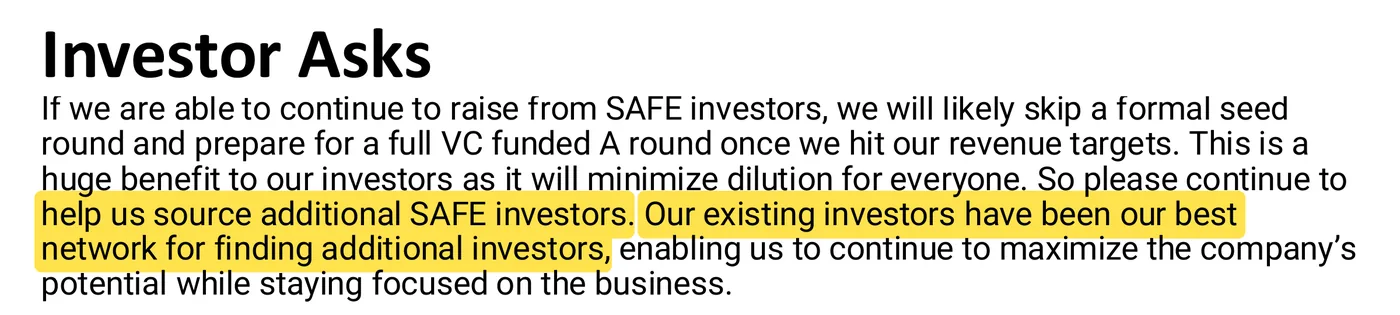
The updates then turned investors into salesmen. "Please continue to help us source additional SAFE investors," the November 2024 update said, adding that "our existing investors have been our best network for finding additional investors". Two days later John Peterson posted the new Hummer EV he had bought on Black Friday.

The man selling the SAFEs, Stewart Reichardt, was presented to investors as having "joined the team full time" while he held no active licence of any kind. The September 2024 update said the SAFE raise was authorized only up to $1.5MM, and the February 2025 prospectus then reported "$2MM total invested" and "over $3MM". The valuation cap rose to $15MM on the strength of "initial revenue" that was never reported. Investors were told PRE was "a QSBS certified investment". No government body issues any such certification, and a SAFE is not stock.
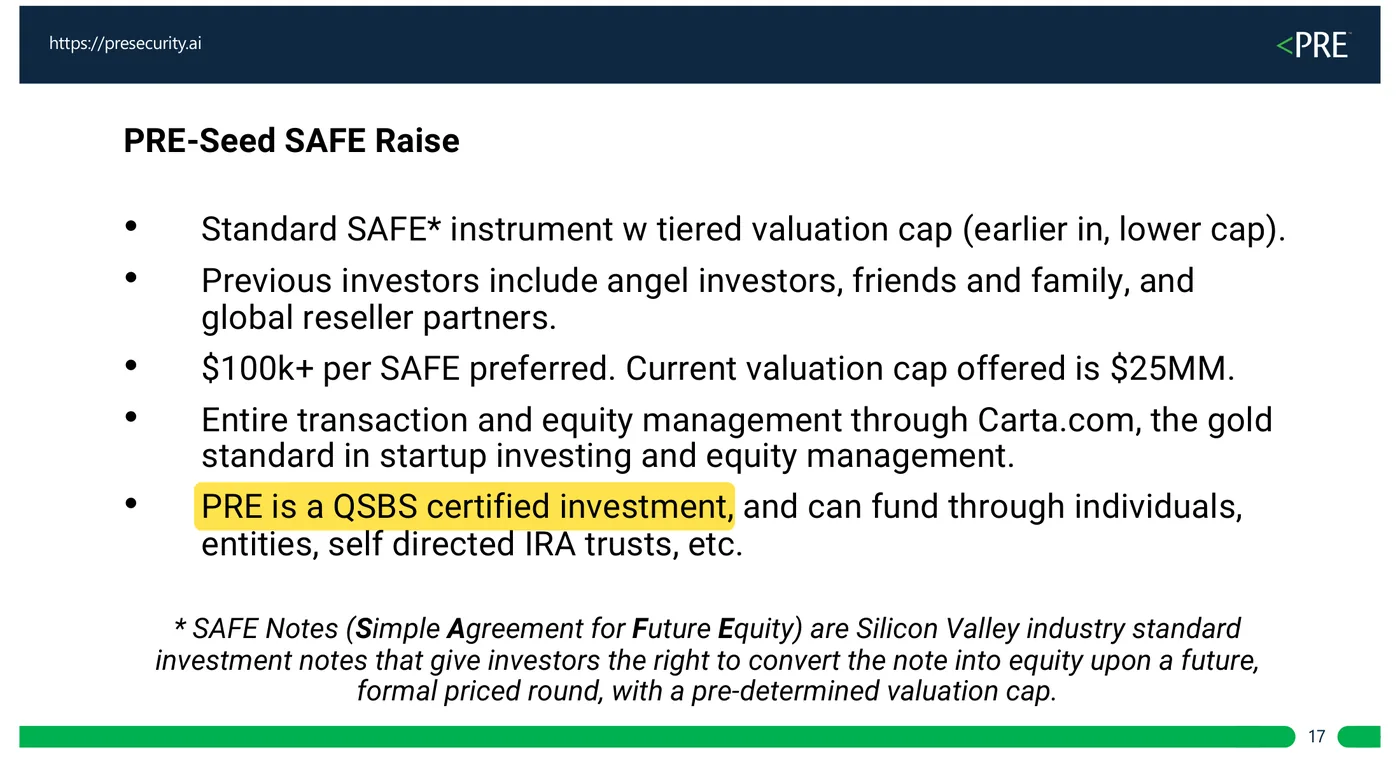
Every SAFE gives as the company's address a Salt Lake City house belonging to Paul's brother's family. PRE called itself headquartered in San Jose but never registered to do business in California, and its "headquarters" was a coworking center that sells offices by the day. In December 2025 PRE told existing investors it would "extend one last time" a last chance at "earlier cap levels", citing purchase orders and revenue that were never reported afterwards.
From 1 March to 28 April 2026 Delaware listed PRE's charter as void, while PRE kept selling SAFEs warranting that it was "in good standing". On a day the charter was void, the 8 April update from John Peterson and Paul Jespersen urged investors to reinvest because "now is the time!", giving total funding as both "~$10M" and "$7.5M" in the same update. A month later PRE urged them to bring in family members "before this window of opportunity closes". The pressure to put in more money never let up, even on the days PRE had no right to do business at all.
Patents that did not exist
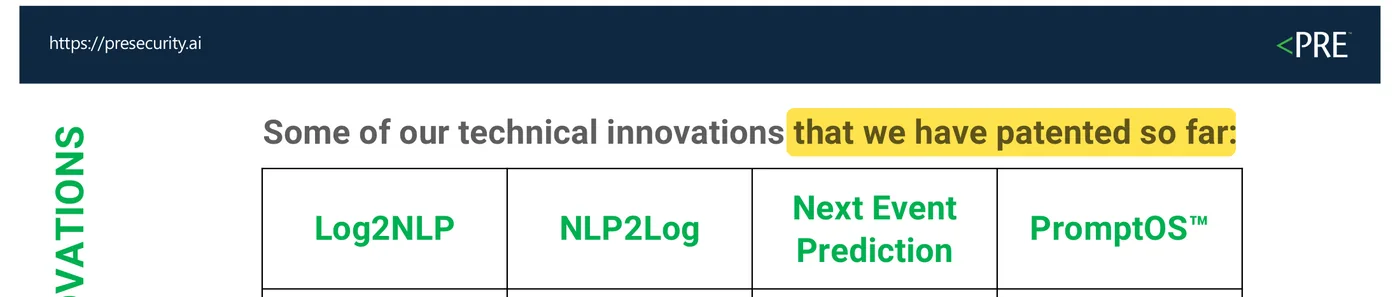
PRE told investors it had patents for a year and a half before it had one, and the founders knew it, because they had filed the applications themselves. PRE filed its first two provisional patent applications on 15 March 2024, and nothing was filed before then. Seven weeks later a paid release said PRE had "Filed Multiple Patents". From October 2024 the website said PRE "has secured multiple patents", and the prospectus showed four "technical innovations that we have patented so far". The December prospectus repeated it. PRE held no patent at all.

PRE's fast-tracked application went to the patent office in 2025, and on 30 June 2025 the patent office rejected every claim as abstract and obvious. No update disclosed the rejection. PRE went on advertising "Patented Parserless Ingestion" and "our patented Parserless technology", and in December 2025 told investors its first patent was "Approved for Issuance!" without saying every claim had first been rejected. In February 2026 its LinkedIn said the technology was "Patented by John Peterson".
On 8 April 2026 investors were told "In February, we were awarded our first patent". The patent did not issue until 21 April 2026. US 12,608,539 names both John Peterson and Paul Jespersen as inventors, though PRE's own release called John Peterson "the patent's inventor". The July update claimed six pending applications. Only two others are on the public record: one has seen no action since April 2025, and the other was rejected in July 2026 with no response on record. In August 2026 PRE's Black Hat release cited "US Patent No. 11,299,850" as its own. That number belongs to a patent on converting plant biomass to glucose.
John Peterson says "a few big companies" infringe PRE's patent and that PRE has licensed it, but the patent office records no licence and PRE has named no infringer. He announced an "18 day tour throughout ASIA" for "Patent Licensing Meetings" under an AI-generated image of himself holding the patent. The only licensee he has named is Eley, "invented by myself and a couple of others". Investors were told it came from AskEley, "a new startup company". AskEley, LLC was formed in Delaware in 2023, seven months before PRE, and its own website named John Peterson "Founder & Inventor | Chairman of the Board", with his brother as CEO and his son as a director. The CEO sits on both sides of the licence of PRE's only patent, and his family runs the other side. Three weeks after investors were told AskEley was an outside startup, its website was rebuilt to remove him and his family.
Awards, customers and headcount
The awards were bought. PRE presented its Cybersecurity Excellence Awards to investors as "RSA CYBERSECURITY EXCELLENCE AWARDS", from a site with no connection to the RSA Conference. That program sells entries from $299 to $1,900, reviews nothing until it is paid, and gives every category multiple winners by company size. PRE's badges sat in the "1-9 Employees" bracket. It is pay-to-win. John Peterson's "AI Security Innovator of Year" page carries a self-written biography calling him the "primary inventor" of Stellar Cyber's product. "Moved up a class" meant a bigger headcount bracket, and three consecutive years of awards meant three years of buying. By 2026 the same badges were billed to investors as "independent validation".
The attention was manufactured the same way. PRE paid for press releases on a steady schedule, claiming "monte carlo simulations" and "unprecedented accuracy", while staff comments landed on its LinkedIn posts seconds apart. John Peterson told a Singapore audience PRE's predictions are "95% accurate", a figure never backed by any published or independent result. PRE said its CyberLLM was "meticulously trained" and never showed on what. Investors were shown him "Presenting Keynote" at a Singapore show whose programme lists a 25-minute vendor session. PRE paid to launch "AgentGuard" with no named customer and no word it could be bought.
Customers were promised again and again and never shown. "Initial customer wins in hand" was announced in July 2024, though PRE's own 2025 prospectus dated its first customer win to January 2025. December 2024 was to bring "First PO's and Revenue", and none was ever reported. The February 2025 prospectus set demo data from a fictional company beside its "First customer win". The March prospectus put Rosewood Hotel Group's logo under "Early Engagements & Wins". The April 2025 update announced a "First paid customer deployment @ the Ministry of Defense in Vietnam" and gave no revenue, burn or cash figure of any kind. Logos shown to investors as PRE engagements include companies that Stellar Cyber presents as its own customers, and one whose CEO calls Stellar its main platform. The "MSSP partner" in the Netherlands never produced a reported order.
The partnerships were announced the same way. From Waikiki, John Peterson posted that PRE had "Just signed a new partnership in Southeast Asia", which was never named. A two-week "business journey" across Southeast Asia left one third-party business record, and it names no customer. A Black Hat "epic business week" in a Cosmopolitan suite produced no named customer. In October 2026 investors heard of "three international military organizations", with no contract, value or payment published, after John Peterson had posted a "purchase order from the swiss army" under an AI-generated image. His Japan "3-YEAR STRATEGIC AGREEMENT" and "First Deals in Japan" posts name no partner, customer or amount. In three years PRE has never reported a single dollar of customer revenue to its investors.
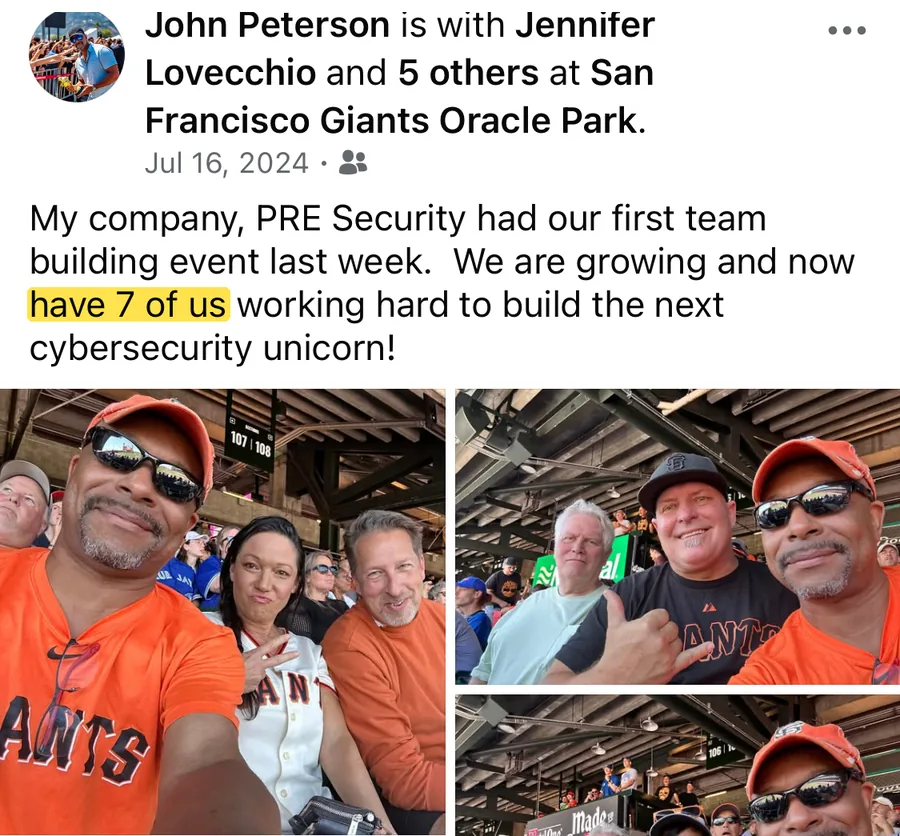
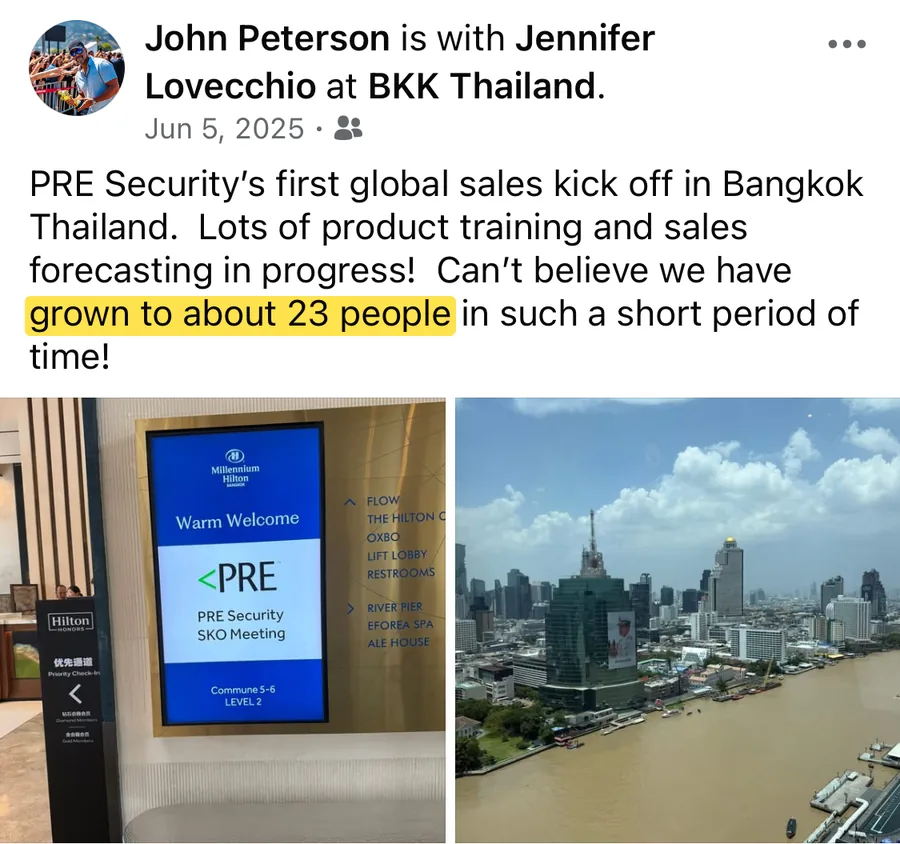
Headcount moved with the story. John Peterson posted in July 2024 that PRE "now have 7 of us", and in June 2025 he publicly put it at "about 23 people", while investor updates claimed "37 FTE" and then 39 employees. PRE's head of go-to-market moved to another company in February 2025, keeping only a part-time advisor title. By October 2026, with payroll failing, John Peterson was saying PRE had replaced "almost all of our software developers" with "over 100 AI Employees".
Where the money went
While PRE raised money from friends and family, John Peterson's own posts recorded a Ferrari service day, and a Las Vegas VIP suite and a new Hummer EV the day after asking investors to find more SAFE buyers. They recorded four resort weekends in four weeks, a holiday party for which PRE "Flew in our team and spouses" to Las Vegas, and a Singapore show followed by "R&R" in Phuket and Hong Kong with Stewart Reichardt.
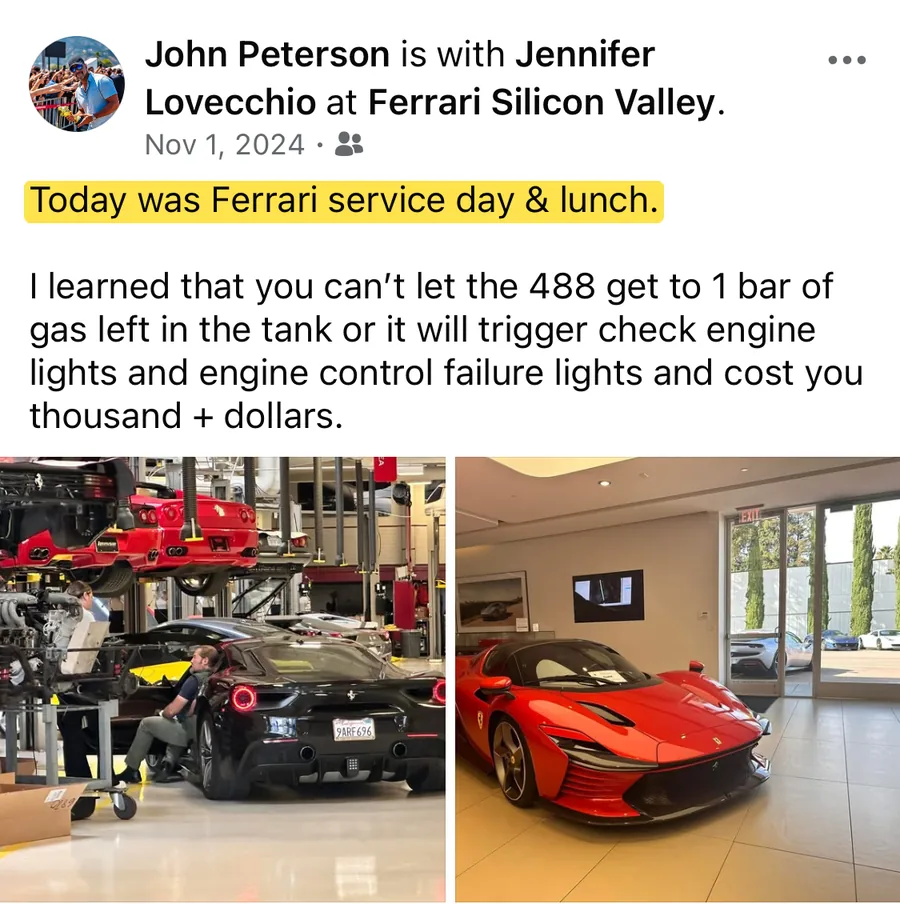
The "business tours" read the same way. Their photos are mostly hotel suites, rooftop bars and pools, Dublin pubs, Lake Como and Ferrari's museum, and Phuket, the Sturgis rally, Monterey car week and Waikiki. The "world tour" update reached investors the week he flew to Cancun for his birthday. RSA 2025 brought "Lots of great meetings!" in photos taken inside bars, followed by a beach "staycation". A Bucharest trip ran on to Rome, Milan and the Gulf. The trip investors saw as "Partner Event Digit - Dubai" took both founders to the Abu Dhabi Formula 1 finale.
As payroll failed, the travel went on. Five days after the payroll his own engineer says PRE never funded, he posted a BMW M4 for his wife and "Time for a bigger garage". Then came Las Vegas for New Year, Paris, London and Madrid, "6 countries in 10 days", in the weeks a court later found PRE had stopped paying wages in full. Then Phuket "downtime before showtime" and a Warriors game during RSA week, and on the morning a PRE engineer was fired for demanding his wages, a birthday scuba trip. Then came Romania, Dubrovnik and Vienna, "my 89th country", and Belize for his wife's birthday. Two days after the wage judgment he posted from Phuket that he was "closing 2 deals over here". When people asked whether company money paid for the travel, his wife answered with an insult, not a denial.
Paul Jespersen and his wife bought two Lopez Island lots for $539,000, $489,000 of it lent by the seller, two weeks before the April 2025 update announced a "surge of demand". The 2026 property tax on those lots was still unpaid in November 2026. On 4 May 2026, while still co-CEO, he incorporated his own cybersecurity company, Baseline Security, and no update disclosed it. In October investors were told he "remains a co-founder, significant shareholder and active participant", in the same week Baseline registered in Washington with Paul as its sole governor. The founders lived well while the company they were raising money for never reported earning any of its own.
Unpaid wages and a court judgment
PRE stopped paying its people. A former employee's verified complaint says PRE never funded its 15 December 2025 payroll and that its 2026 payrolls ran late, then half, then not at all, while PRE's LinkedIn page read "Now hiring". On 15 April 2026 a PRE sales engineer formally demanded his unpaid wages and proof that payroll taxes had been paid. His system access was cut about two minutes later, and 35 minutes after the demand Paul Jespersen fired him. He sued PRE, John Peterson and Paul personally in Culpeper County, Virginia, including a count to pierce the corporate veil. His complaint says his house went into foreclosure after the payroll failures. The July 2026 update called this PRE's "strongest position since the company was founded" and left the suit out.
None of the defendants appeared. The court entered default judgment on 8 September, held an evidentiary hearing on the claims, and on 21 September 2026 entered final judgment against PRE, John Peterson and Paul Jespersen. It found that from the 31 December 2025 payroll onward PRE failed to pay his wages in full and failed to pay what was due when he was fired. A corrected final judgment followed on 11 November. No appeal was filed, and the creditor is moving to collect, with a post-judgment hearing set for 24 November.
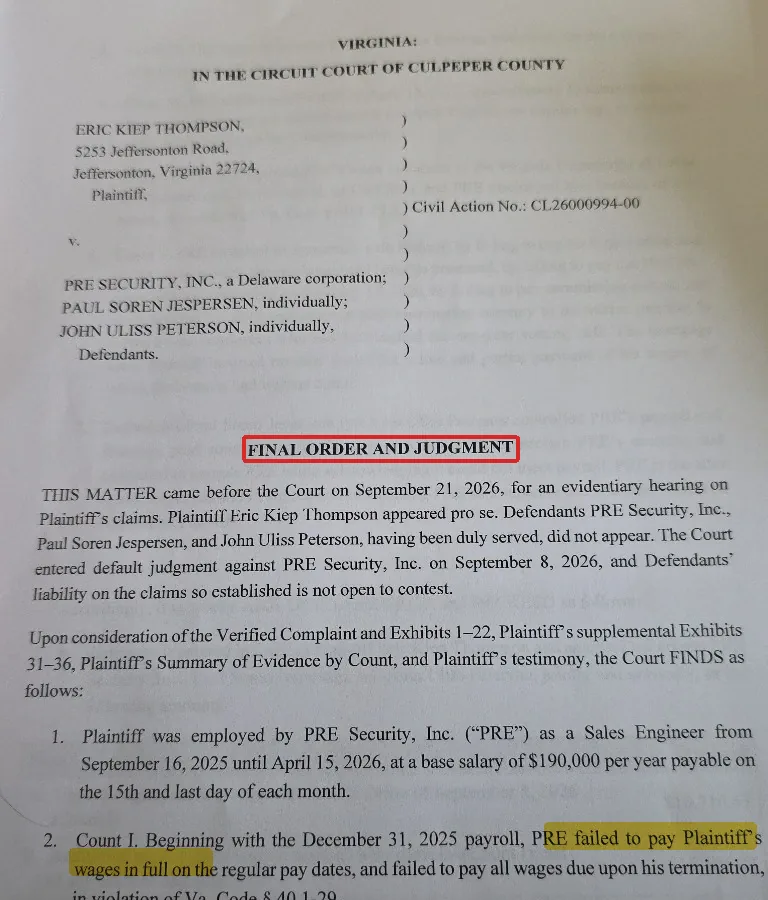
That is not a dispute. It is a court's final word. On judgment day the founders sent investors a note blaming "a disgruntled former employee" and saying they "dispute the claims", without mentioning the judgment. The October update said PRE "has engaged legal counsel", and the docket shows no counsel of record for any defendant. In November John Peterson was still calling the case "an ongoing legal dispute", seven weeks after final judgment.
How the founders answer
The founders have never answered the record with facts. They answer by going after people. A former employee's public question about unpaid wages vanished from John Peterson's LinkedIn article. He built an AI agent he floated as a "Fake News detector". On 7 November 2026 he posted "A Message to Our Investors" beside an AI-generated portrait of himself in Marine dress blues, naming three former employees for "further examination". One of them was the man who had just won the wage judgment. His own small print said "No wrongdoing has been established". The same day he told his audience of "multiple suspects" in crimes against PRE. He accused a former employee of "making death threats" without producing any message, date or police report, and dared him to "Come at me".
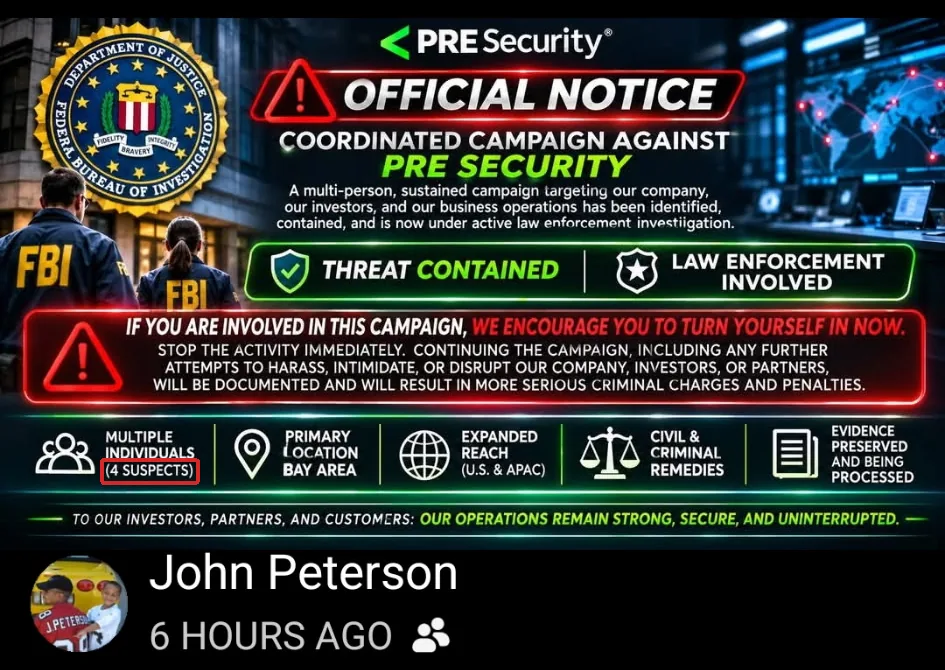
On 20 November he posted a PRE "OFFICIAL NOTICE" under the FBI seal naming "4 SUSPECTS" and promising "jail time". No charge or case exists. On 23 November he wrote to investors that "We strongly dispute the allegations" without naming a single false fact or mentioning the judgment. PRE's YouTube channel had meanwhile posted a 29-minute keynote in an AI-generated voice that introduces itself as John Peterson.
This is the ProxyComm playbook. In 2009 critics were threatened with termination and forfeited pay. In 2026 they are called suspects and threatened with jail. Either way, the point is to make investors look at the critics instead of the record.
The same scheme, run twice
Set side by side, ProxyComm and PRE are the same operation run by the same men. Both sold people who trusted the founders on a story that sounded technical and a payoff that sounded certain. Both were kept going by new money from the people they recruited, and both turned those people into recruiters. Both inflated their numbers, told members the company was healthy while pay failed, met criticism with threats, and rewrote the record when it turned against them. In 2009 it ended with frozen commissions, a deleted blog, a relaunch under a relative's name and a bankruptcy dismissed without discharge. In 2026 PRE has a charter that went void while it sold SAFEs, a patent that arrived a year and a half after it was claimed, a licence to the CEO's own family company, a co-CEO with a new company of his own, and a final wage judgment against the company and both founders by name.
What you can check yourself
You do not have to take this page's word for any of it. Ask yourself what you have actually been shown. Have you ever seen a bank statement, a financial statement or an audited figure? Have you ever been told the name of a paying customer alongside a contract value and a payment? Did any update tell you about the Ericom lawsuit, the rejected patent, the void charter or the wage judgment? Were you ever told that the men running your investment ran ProxyComm? If the answer is no, the founders chose not to tell you. The timeline sets out every step in order with its documents, and the questions are what every investor is entitled to have answered.